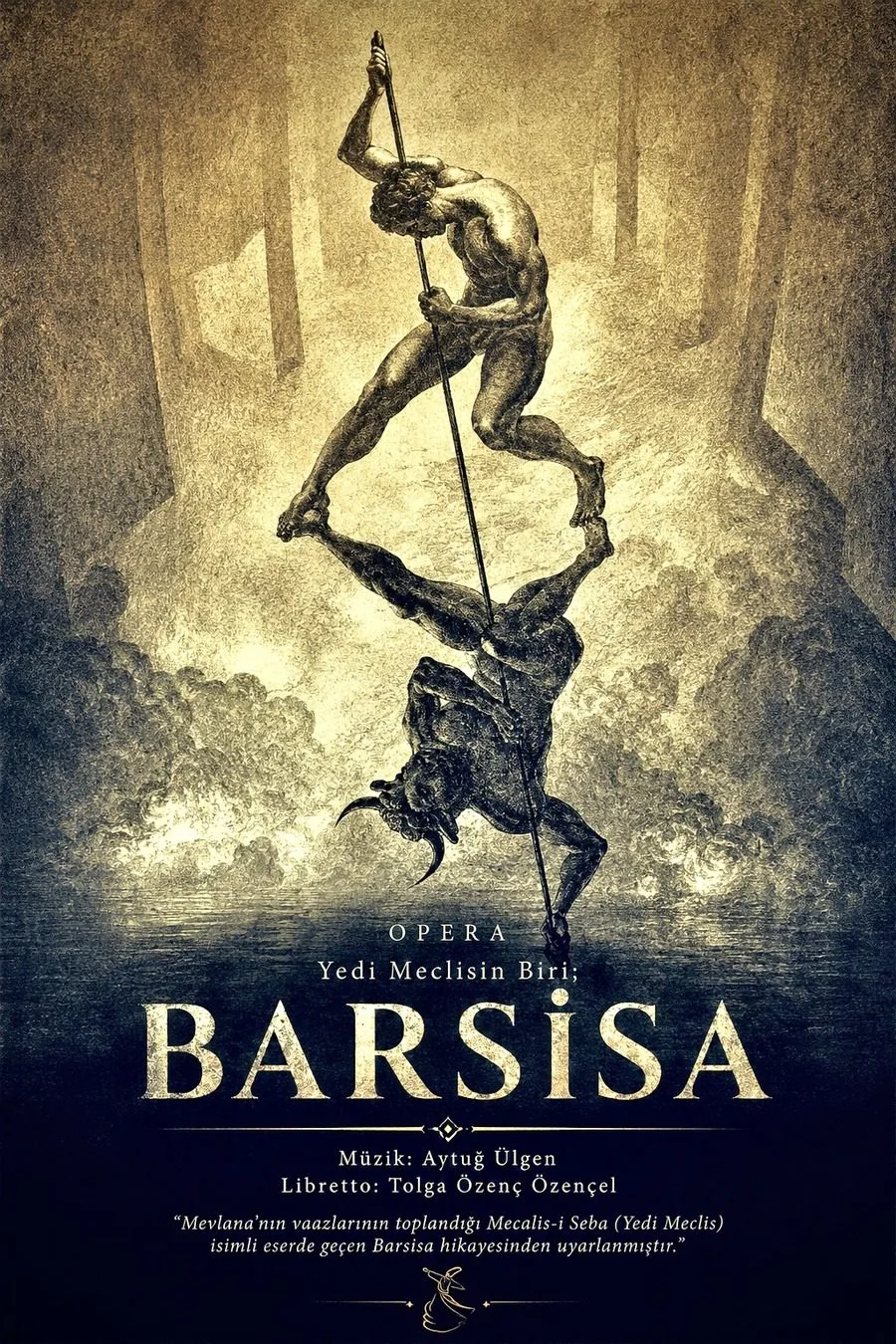
Inspired by a brief story from the First Assembly of Mecâlis-i Seb'a (The Seven Sessions), Mevlana's collection of seven sermons, Barsisa is an opera centered on the concept of sin and the metaphor that a person who "blows out the candle within" will ultimately see their true self in the darkness.
Among the Children of Israel lived Barsisa, a scholar renowned for his wisdom, faith, and healing gifts. Revered by all who sought his counsel, he appears to possess a soul beyond the reach of evil itself. Yet Satan believes that even the strongest fortress contains a hidden gate. The arrival of a young woman in Barsisa's life becomes not merely a human encounter, but the beginning of a deadly trial between faith and desire, compassion and possession, truth and illusion. In a story where innocence, passion, and deception intertwine, an invisible battle unfolds within the darkest recesses of the human soul.
Based on the parable recounted in Mevlana's Mecâlis-i Seb'a, Barsisa is a haunting opera about how a person is ultimately defeated not by the Devil, but by a small crack within themselves. In this tragedy, where good and evil are never simple opposites and where love, fear, pride, and desire become inseparably entangled, the audience is left with a troubling question: Does a human being truly become the victim of Satan, or do they open the door and invite him in themselves?
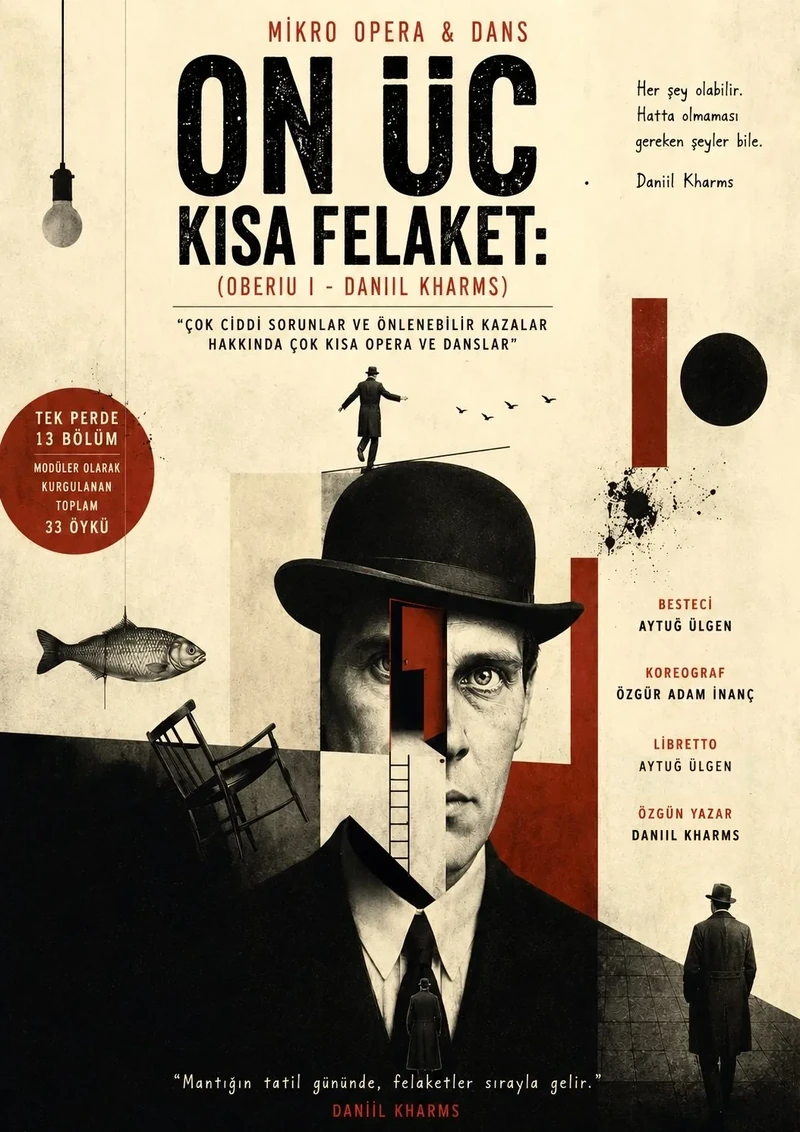
This work is conceived as a collection of 33 short stories. The stories to be performed are selected and assembled according to the venue, context, and artistic framework of each production. Presented as a series of micro-operas and dance pieces, these miniature narratives are designed to be combined into a performance lasting approximately 60 to 70 minutes.
Flexible and modular in structure, each staging offers a unique configuration of stories, allowing the work to adapt to different spaces, audiences, and artistic intentions. Through a sequence of brief yet striking theatrical moments, the production creates a larger dramatic and emotional landscape in which absurdity, humor, tragedy, and imagination coexist.

On a night in 1887, Beşir Fuad—one of the most extraordinary figures in Ottoman intellectual history—withdraws to his study and begins writing the final letters that will secure his place in history. A soldier, thinker, translator, and one of the earliest and most influential advocates of positivism in Turkey, Fuad devoted his life to reason and science, placing them above faith, tradition, and romantic illusion. Yet this final night is not merely a farewell; it is a profound confrontation with the nature of the human mind, death, free will, and truth itself. Memories of his past, the fear of inheriting the mental illness that afflicted his mother, the loss of his son, his fierce battles with the literary establishment, and the ideas that shaped his life all return to stand before him.
With a libretto by Ümit İlban, Beşir Fuad brings to the stage the final hours of a remarkable intellectual who transformed even his own death into an act of scientific observation. In this one-man chamber opera, the audience witnesses a man determined not only to understand life, but to examine his own extinction with unwavering clarity. Exploring the boundaries between reason and emotion, science and belief, free will and destiny, the work ultimately leaves its audience with a troubling question: How much is a human being willing to sacrifice in the pursuit of truth?
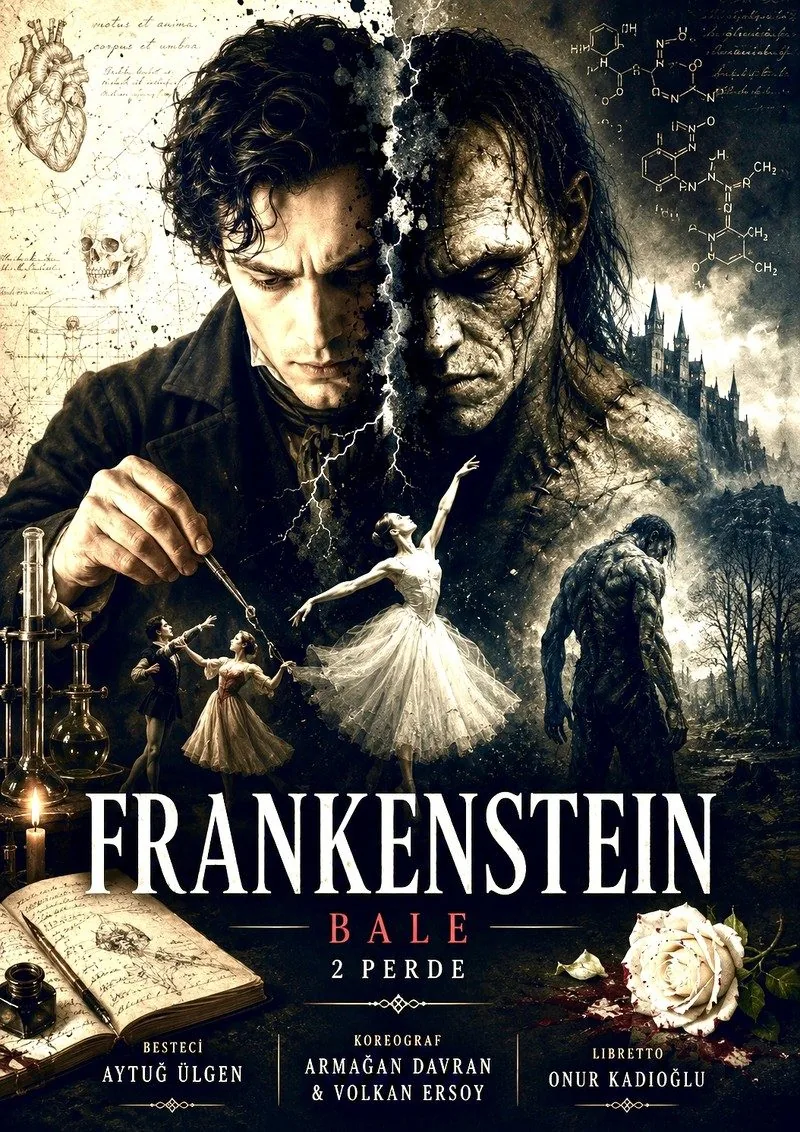
In the first act, the young scientist Victor Frankenstein is portrayed as he seeks to unravel the secrets of life itself. Determined to animate a being of his own creation, he gathers human remains from graveyards and charnel houses. As his friend Henry reflects on humanity, morality, and God, Victor's scientific ambitions increasingly clash with these ideals, revealing the fears and obsessions that drive him. Meanwhile, Elizabeth's love and hope for Victor are symbolized by the arrival of spring during his absence. Yet this season of renewal proves short-lived. The creature Victor has brought to life accidentally kills his younger brother, William, and, in an attempt to conceal the crime, places William's watch in Justine's pocket. Wrongly accused of murder, Justine is convicted and sentenced to death.
In the second act, the audience witnesses the creature's experiences in the world and the violence and rejection it suffers at the hands of humankind. While hiding in a small village cottage, the creature becomes fascinated by Agatha, whose kindness leads him to believe that friendship and acceptance may still be possible. However, when he finally reveals himself, he is met with fear and rejection, deepening his loneliness and despair. Victor and the creature eventually reach an agreement: Victor promises to create a companion for him, but abandons the project at the last moment. This betrayal fuels the creature's rage, leading him to murder Victor's newly wedded wife, Elizabeth. Victor embarks on a relentless pursuit of his creation but fails to destroy it, and ultimately falls victim to the very being he brought into existence. The work concludes by emphasizing the creature's profound isolation and Victor Frankenstein's tragic downfall.
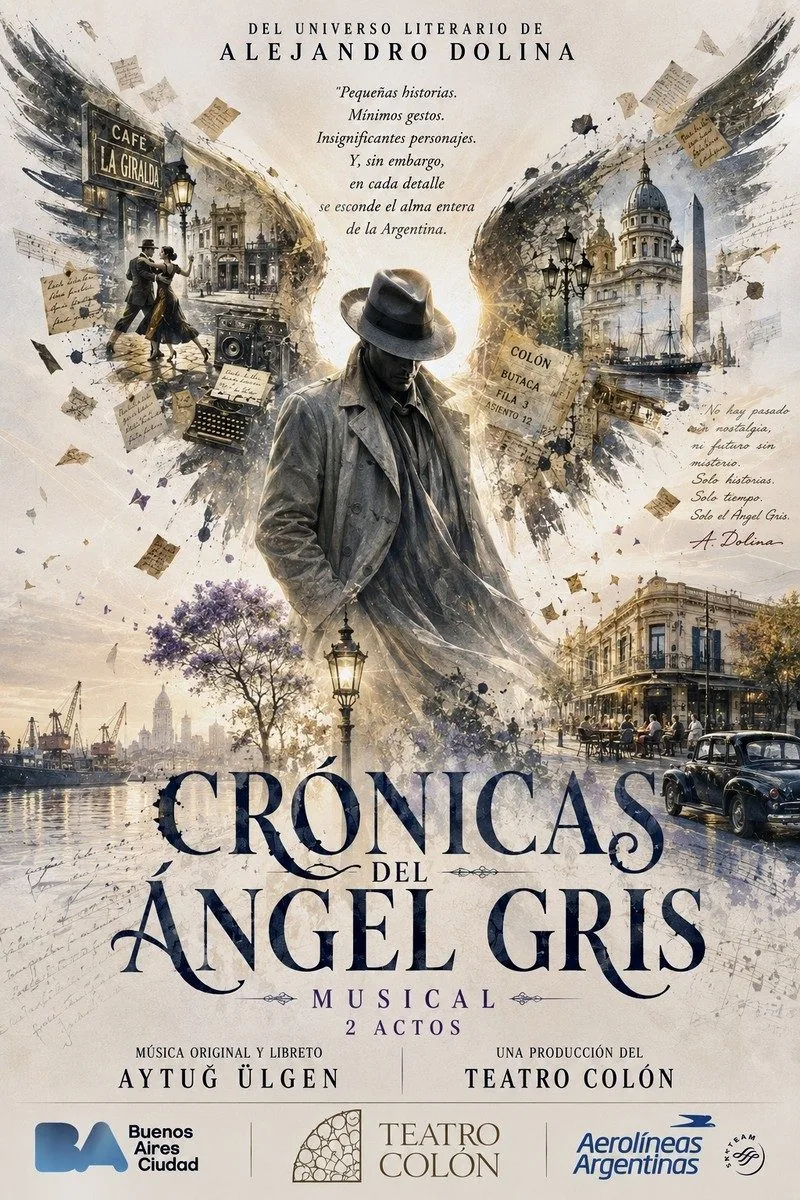
In the forgotten corners of Buenos Aires, where the last tram cuts through the silence of the night, where cafés remain open beneath the streetlights until the late hours, and where old songs echo across empty squares, there exists a mysterious figure who moves unseen among the living. The Grey Angel is neither a guardian nor a judge; he is the bearer of the city’s memory. Through his eyes, the stories of dreamers, lovers, eccentric souls, poets, failures, and the invisible heroes of everyday life unfold before us like a mosaic. Seemingly insignificant on their own, these stories gradually reveal the invisible bonds that bind a city to its people, transforming ordinary moments into legends.
Adapted from Alejandro Dolina’s cult masterpiece, Crónicas del Ángel Gris is a two-act musical that brings together magical realism, urban folklore, nostalgia, humor, and melancholy. Moving between reality and imagination, tango halls and moonlit streets, memories and dreams, the work invites the audience into a poetic universe where the boundaries between the possible and the impossible begin to dissolve. As the Grey Angel gathers the fragments left behind by unfinished loves, forgotten longings, and vanished conversations, a deeper truth comes into view: cities are not built from stones, streets, and buildings, but from the stories people leave behind. In this celebration of memory, desire, and collective imagination, Buenos Aires becomes not merely a setting, but the true protagonist of the work: deeply personal, legendary, and timeless.

Mem û Zîn
Inspired by one of the great love stories of world literature, Mem û Zîn is a two-act opera exploring destiny, devotion, power, and sacrifice. Bound together by an extraordinary love, two young souls must confront not only the obstacles that separate them, but also the invisible forces created by jealousy, ambition, and the darker impulses of the human heart. As their journey unfolds, love transcends personal desire and becomes a profound exploration of free will, conscience, and fate.
Adapted from the timeless masterpiece of Ahmad Khani, the opera brings together the poetic traditions of the East with the expressive language of contemporary opera. Through its lyrical storytelling, powerful dramatic structure, and richly imagined theatrical world, Mem û Zîn presents a tragedy whose emotional resonance reaches far beyond cultural boundaries. It is a meditation on love's endurance in the face of death, the transformative power of forgiveness, and humanity's eternal search for meaning.

CARBAJAL CONCERTO for Diatonic Harmonica and Symphony Orchestra
Carbajal Concerto is a large-scale concerto composed by Aytuğ Ülgen especially for Mariano Massolo, widely regarded as one of the world's most expressive diatonic harmonica virtuosos. Emerging from the heart of the European musical tradition, the work explores the cultural and musical history of the harmonica through a journey of sound and style that traces the instrument's evolution from its origins to the present day.
The concerto's most distinctive feature is its treatment of the diatonic harmonica as a truly virtuosic solo instrument, pushing it far beyond its conventional boundaries. Unlike traditional harmonica concertos, Carbajal Concerto challenges the soloist to the utmost limits of both technical mastery and expressive power. With its extraordinary palette of colors, vast expressive range, and passages of remarkable virtuosity, the work is distinguished by its rich orchestration, unique sonic landscape, and strong melodic character. The orchestra assumes an active role within the narrative and dramatic structure, becoming a true artistic partner rather than a mere accompaniment. As a result, the harmonica emerges as a powerful and distinctive symphonic voice, while the concerto evolves into a vivid and constantly developing dialogue between soloist and orchestra.
The second half of the program features Symphonic Swing, a collection of symphonic arrangements by Aytuğ Ülgen based on works selected from Mariano Massolo's recordings released over the years. Bringing together the richness of symphonic writing and the free-spirited energy of the swing tradition, these arrangements invite audiences not only to listen, but also to experience the music on a physical level and immerse themselves in its irresistible vitality.
Together, Carbajal Concerto and Symphonic Swing offer an extraordinary concert experience that unites the virtuoso tradition of classical music, the richness of symphonic expression, and the unique expressive power of the harmonica.
Content coming soon

The Iron Man
Adapted from Ted Hughes' timeless classic, The Iron Man is a one-act children's musical that tells the story of a mysterious giant metal figure who suddenly appears on a lonely coastline. Feared by those who cannot understand him, the Iron Man begins to discover the world through the friendship of a curious child. As he explores nature, animals, and human life, he learns not only how to survive, but also how to trust, to share, and to belong. Yet fear and prejudice remain the greatest obstacles between the unknown and acceptance.
Blending science fiction with poetic storytelling, The Iron Man is a warm and imaginative musical about friendship, courage, environmental awareness, and respect for those who are different. Seen through the eyes of a giant made of steel, the story invites audiences of all ages to rediscover what it truly means to be human, reminding us that the greatest strength lies not in destruction, but in understanding, compassion, and the courage to protect one another.

The Farting Honey
Blending humor with sharp social satire, Aziz Nesin's The Farting Honey is a one-act children's musical that tells the story of a poor old woman desperately searching for a spoonful of honey for her sick grandchild. Turned away by everyone she meets, she eventually becomes the target of ridicule by the servant of a wealthy moneylender. But the pain inflicted upon the powerless takes an unexpected and delightfully comic turn. After tasting a jar of magical honey, the greedy moneylender and his household find themselves trapped in an absurd predicament from which neither wealth nor power can rescue them.
Filled with colorful characters, lively music, and fast-paced comedy, The Farting Honey entertains young audiences while celebrating kindness, generosity, and empathy. Bringing together Aziz Nesin's unmistakable wit with the energy of musical theatre, the work transforms a humorous fairy tale into a timeless fable about greed, compassion, and the consequences of mocking those in need. Warm, playful, and thought-provoking, it offers an unforgettable theatrical experience for children and adults alike.

THE LITTLE PRINCE - Symphonic Tale
Adapted from Antoine de Saint-Exupéry's timeless masterpiece, The Little Prince has been conceived as an original symphonic tale that brings together music, literature, and the performing arts. More than a stage adaptation of a beloved classic, the work offers a poetic concert experience in which narrative and music meet as equal partners, engaging audiences of all ages.
In this unique adaptation, the story is conveyed through a narrator performing a specially prepared text, while the symphony orchestra serves as an active dramatic force, shaping the emotional and theatrical landscape of the narrative. By integrating music as an inseparable part of the storytelling, the work invites audiences into both the inner and outer worlds of the Little Prince.
The musical fabric of the production is drawn from works by some of the most distinguished composers of the French classical tradition. Reimagined and enriched through colorful orchestrations tailored to the atmosphere of the story, this carefully curated repertoire is presented in organic harmony with Saint-Exupéry's poetic universe. Music and narration thus merge into a single dramatic structure, creating a distinctive and original stage language.
Appealing to a broad audience ranging from children to adults, The Little Prince explores universal themes of friendship, love, responsibility, loneliness, and the meaning of being human. Having been performed numerous times around the world and honored with various awards, the work continues to attract widespread acclaim for the unique bridge it builds between the symphonic concert tradition and theatrical storytelling.
The text adaptation, musical dramaturgy, orchestrations, and arrangements of this symphonic tale, based on Antoine de Saint-Exupéry's work of the same name, were created by conductor and composer Aytuğ Ülgen.


Sabancı Foundation Short Film Competition — 3rd Place Award
Accolade Global Film Competition — Award of Excellence
Moscow International Short Film Festival — Best Narrative
Moscow International Short Film Festival — Best Screenplay
Toronto Independent Festival of CIFT — Award Winner
Italia Green Film Festival — Official Selection
EarthxFilm — Official Selection
London Indie Short Festival — Award Winner
Content coming soon
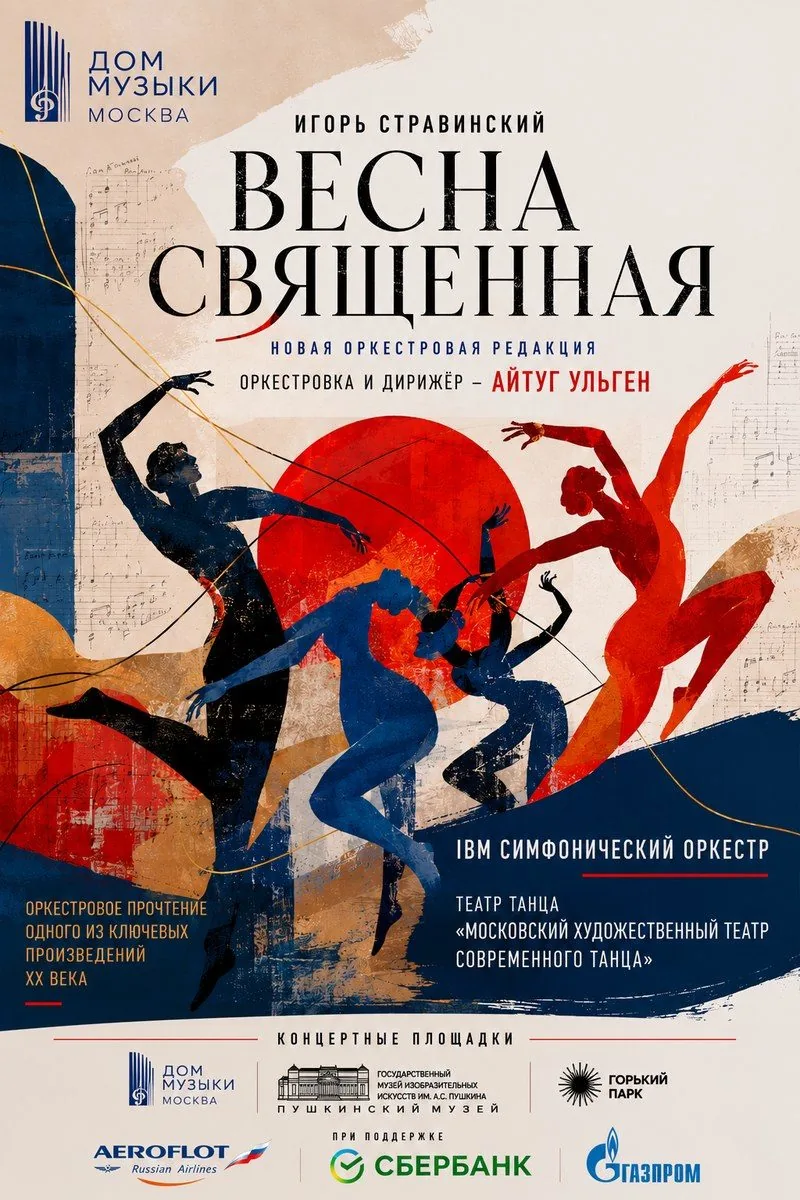
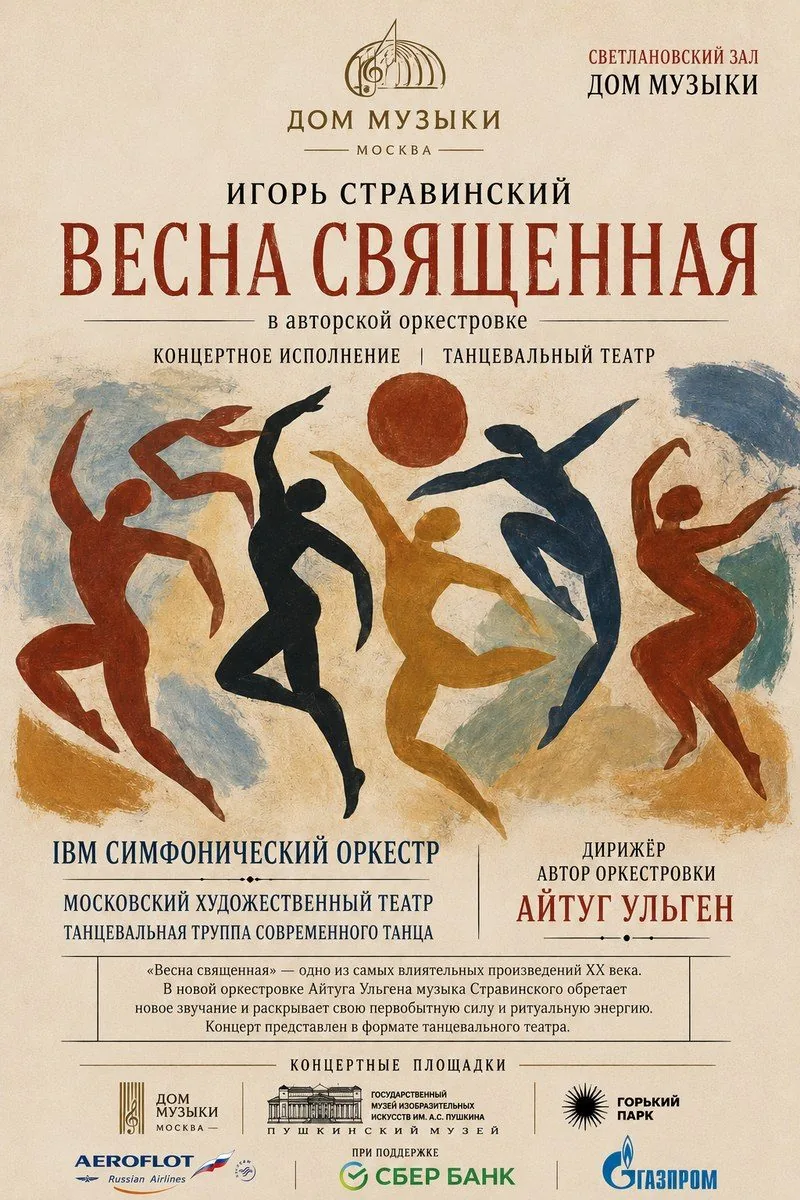
Created by Igor Stravinsky in 1913, The Rite of Spring is one of the most groundbreaking works not only in twentieth-century music, but also in the history of modern art. Yet the version performed around the world today often represents the final stage of the work’s creative process. Stravinsky’s earliest sketches, working notes, and correspondence with his close circle suggest that the composer initially envisioned a markedly different sound world and a different theatrical approach.
This project aims to return to the work’s first creative impulses and to reconsider Stravinsky’s original conception. In the new orchestration, prepared on the basis of the composer’s early drafts and personal notes, the orchestral forces that grew to monumental proportions over time have been rescaled; the colors, textures, and internal balances of the music have been brought closer to the character Stravinsky first imagined. In this way, The Rite of Spring gains a form that is both more accessible and more frequently performable, while its musical details become more transparent and more clearly perceptible.
The work is also approached not merely as a classic of modern dance, but as the ethnographic and theatrical narrative Stravinsky originally conceived. Built upon primitive rituals, seasonal cycles, collective memory, and the idea of sacrifice, this staging seeks to restore the dramatic unity imagined by the composer. In this respect, the project does more than reinterpret The Rite of Spring: it transforms the work into a journey back toward its origins.
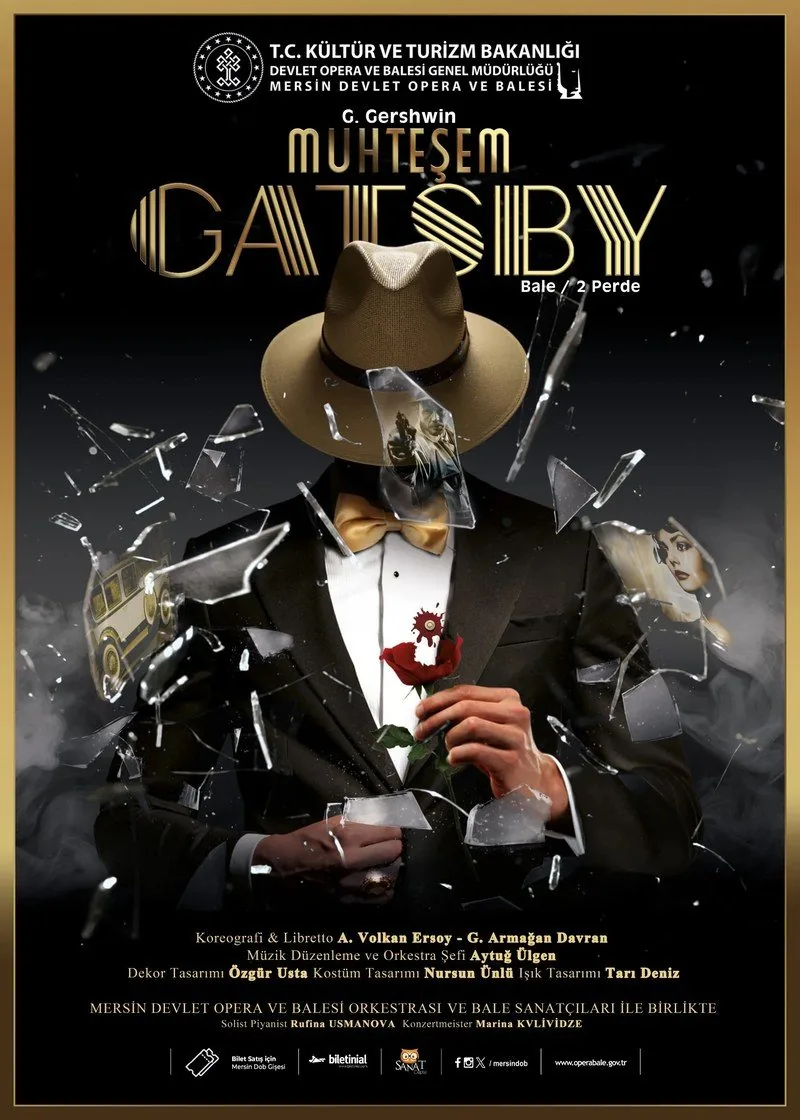
THE GREAT GATSBY - Ballet
Adapted from F. Scott Fitzgerald's novel, widely regarded as one of the masterpieces of world literature, The Great Gatsby is a compelling ballet centered on love, passion, wealth, ambition, and the fragility of the American Dream. Staged by choreographers Armağan Davran and Volkan Ersoy, with musical dramaturgy, orchestrations, arrangements, and additional original music by conductor and composer Aytuğ Ülgen, the production invites audiences into the dazzling world of the Jazz Age while revealing the loneliness, disappointments, and unattainable ideals hidden beneath its glittering surface.
The story revolves around the enigmatic millionaire Jay Gatsby and his determination to reunite with Daisy Buchanan, the great love he lost years before. Beneath the lavish parties, magnificent mansions, and displays of boundless wealth lies a profound and obsessive longing that defines Gatsby's entire existence. Yet his desire to recreate the past ultimately draws the characters toward an inevitable tragedy. Through the expressive power of ballet, Fitzgerald's timeless narrative becomes a vivid exploration of both the brightest aspirations and the darkest desires of the human spirit.
The musical foundation of the work is built upon an extensive selection of George Gershwin's most celebrated compositions. Bringing together the energy of jazz and the richness of symphonic expression, this repertoire has been reimagined and reshaped to serve the dramatic flow of the story. Expanded through additional original compositions that capture the spirit of the era, the musical landscape forms a cohesive dramatic structure for the ballet. Going beyond a conventional stage adaptation, The Great Gatsby creates a contemporary ballet language in which music, dance, and narrative become inseparably intertwined.

CYRANO DE BERGERAC - Ballet
Adapted from the story of one of the most beloved heroes of French literature, Cyrano de Bergerac is a compelling ballet centered on love, sacrifice, honor, and the struggle between self-perception and human imperfection. Inspired by Edmond Rostand's timeless masterpiece, this stage adaptation brings audiences face to face with both the most fragile and the most noble dimensions of the human spirit through its emotional depth and powerful dramatic structure.
At the heart of the story is Cyrano, a man admired for his extraordinary intelligence, courage, and poetic brilliance, yet unable to confess his love because of his appearance. Deeply and hopelessly devoted to his cousin Roxane, Cyrano agrees to help the young and handsome Christian win her affection. As Christian's appearance and Cyrano's words become intertwined, an extraordinary relationship emerges, leading the characters on an unforgettable journey through love, devotion, and tragedy. Cyrano's decision to sacrifice his own happiness for the happiness of the woman he loves has made the work one of the most moving love stories in world literature.
The original score by composer Turhan Yükseler, together with the orchestrations and arrangements by conductor Aytuğ Ülgen that emphasize the richness of the orchestral palette, illuminate the inner worlds of the characters and further deepen the dramatic impact of the work.
Masterfully adapted for the stage by choreographer Özgür Adam İnanç, who unites music, dance, and storytelling into an extraordinary artistic synthesis, Cyrano de Bergerac was introduced to audiences through an impressive world premiere at the Mersin State Opera and Ballet. The production received widespread acclaim and subsequently earned its place in the repertoire of the Turkish State Opera and Ballet.
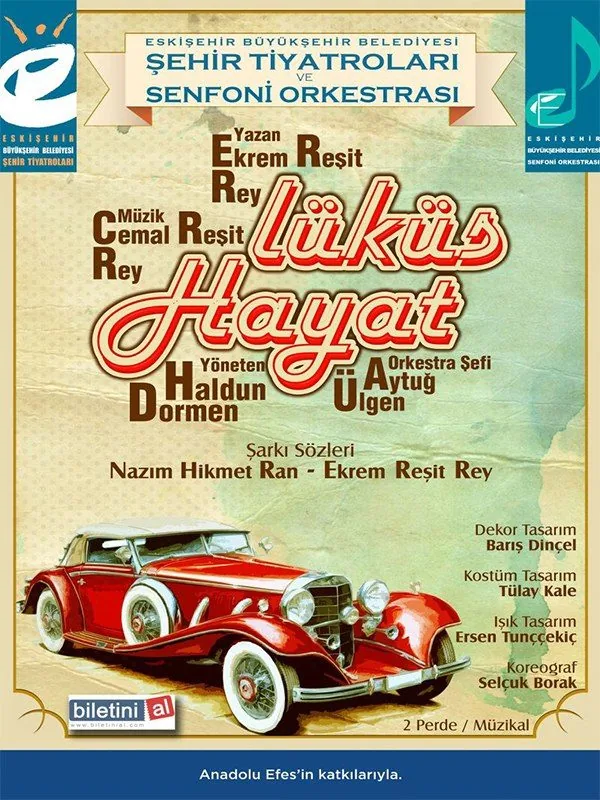
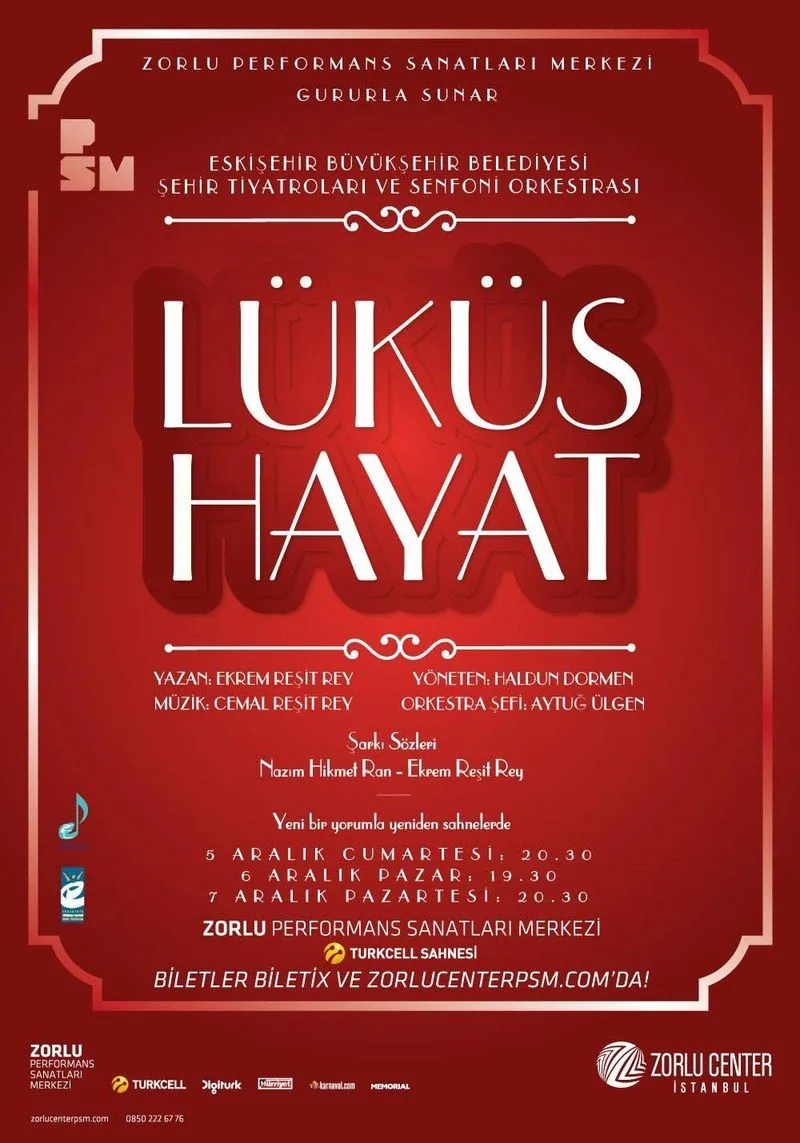
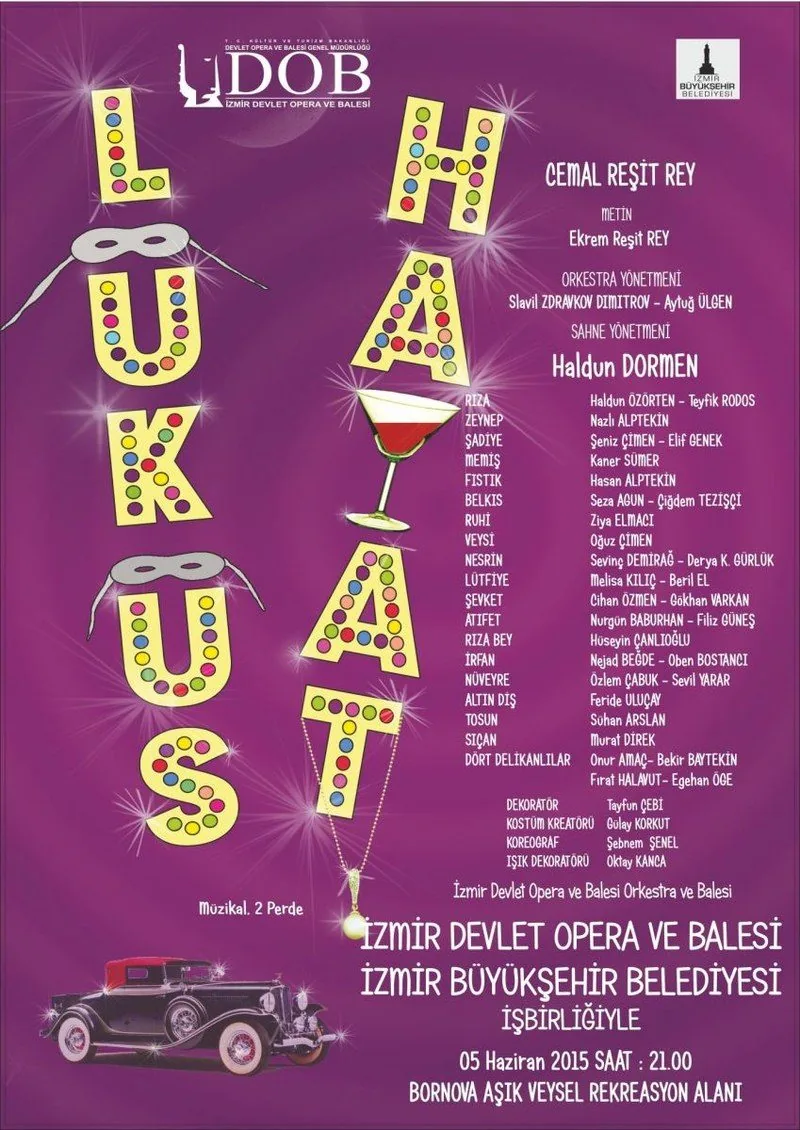
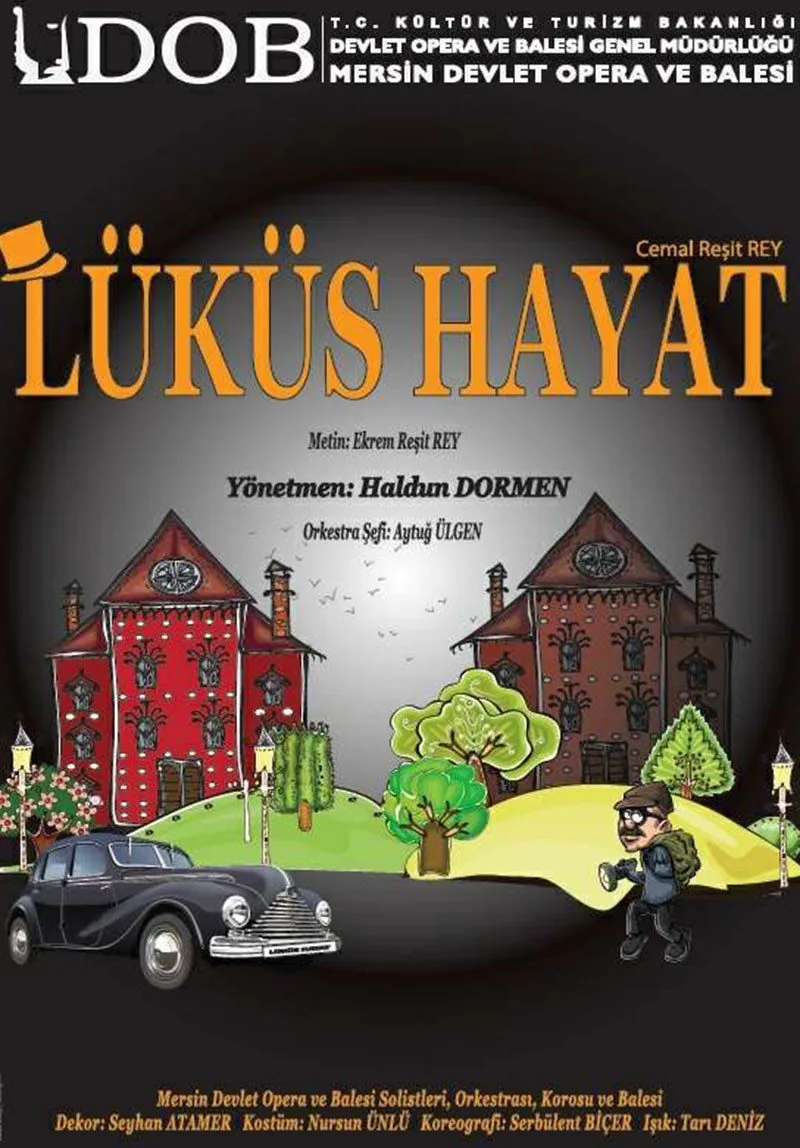
One of the most beloved and enduring works in the history of Turkish musical theatre, Lüküs Hayat (The Luxurious Life) is a classic operetta that humorously explores the social transformations of the early Republican era. Built upon the music of Cemal Reşit Rey and the libretto of Ekrem Reşit Rey, the work follows characters caught between traditional values and the aspirations of modernization and Westernization. With its memorable songs, vivid characters, and sharp social commentary, Lüküs Hayat is far more than a comedy; it is a lively portrait of Turkey's cultural transformation and its search for a modern identity.
For this production, a new orchestration and musical adaptation was created to preserve the spirit of the original work while meeting the artistic and practical demands of contemporary performance. Developed in collaboration with renowned director Haldun Dormen, this new version revisits the original score through expanded orchestral textures, newly composed transitional material, and additional music designed to strengthen the dramatic flow of the production. Performed numerous times across Turkey, this adaptation has become one of the most widely presented contemporary interpretations of a cornerstone of the Turkish operetta repertoire.
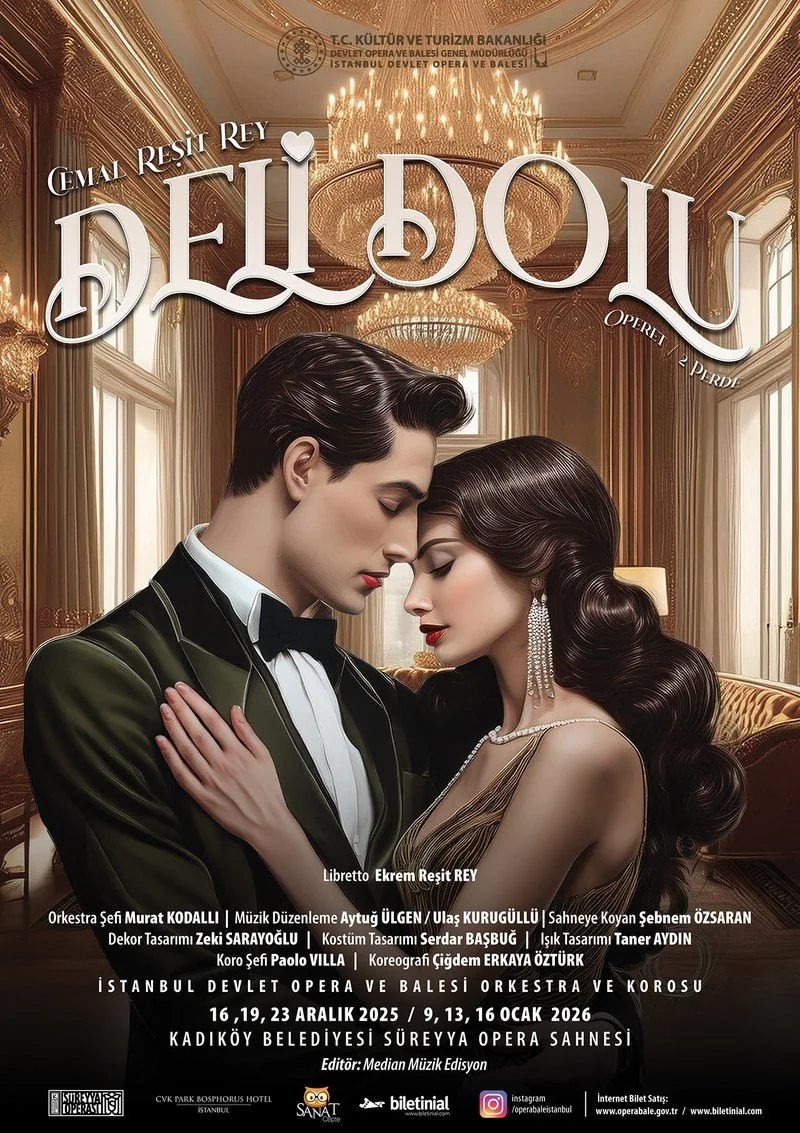
With the operetta Deli Dolu, presented by the Istanbul State Opera and Ballet, audiences are invited to experience a delightful fusion of humor and music.
Composed by Cemal Reşit Rey—one of the leading artistic figures of the modernization movement of the early Turkish Republic—and featuring a libretto by Ekrem Reşit Rey, Deli Dolu occupies a distinguished place among contemporary Turkish operettas. Although the work unfolds as a lively comedy, its central theme is hypocrisy. Beneath its humorous surface lies a remarkably realistic portrayal of human relationships, exposing insincerity, social pretense, and the fragility of family bonds. Considered one of the Rey brothers' most significant stage works, it combines Cemal Reşit Rey's sparkling melodies with Ekrem Reşit Rey's inventive storytelling.
This production is staged by Şebnem Özsaran, with the Istanbul State Opera and Ballet Orchestra conducted by Murat Kodallı. Musical arrangements and orchestration are by Aytuğ Ülgen, with assistant composer Ulaş Kurugüllü. Set design: Zeki Sarayoğlu; costumes: Serdar Başbuğ; lighting: Taner Aydın; choreography: Çiğdem Erkaya Öztürk. Chorus director: Paolo Villa.

Kiss Me, Kate follows the hilarious chaos that unfolds both onstage and behind the scenes as a theatre company prepares to perform Shakespeare's The Taming of the Shrew. The production's director and leading man, Fred Graham, and his former wife, the glamorous Hollywood star Lilli Vanessi, portray Petruchio and Katherine onstage, while their unresolved passions, rivalries, and lingering emotions spill into the performance itself. Meanwhile, the young and charming Lois Lane, her mischievous boyfriend Bill, and a pair of gangsters who unexpectedly become involved in the production add even more confusion to an already tangled situation. Blending romance, jealousy, and a love of theatre, this Broadway classic invites audiences into a fast-paced musical comedy brought to life by the unforgettable songs of Cole Porter.
This production is directed by Bora Severcan, with musical arrangements and orchestral direction by Aytuğ Ülgen, and choreography by Özgür Adam İnanç.


Fiddler on the Roof
Set in the small Jewish village of Anatevka in Tsarist Russia in 1905, Fiddler on the Roof is one of the most celebrated works of musical theatre, exploring the tension between tradition and change, family and individual freedom, faith and the realities of a transforming world. At its center is Tevye, a poor milkman striving to uphold the customs that have guided his community for generations while confronting the choices, aspirations, and love stories of his five daughters.
Created by Jerry Bock, Sheldon Harnick, and Joseph Stein, the musical combines humor, humanity, and an unforgettable score to tell a profoundly universal story about identity, belonging, migration, and resilience. Balancing warmth and sorrow with remarkable sensitivity, Fiddler on the Roof remains a timeless reflection on the challenges of preserving tradition while embracing the inevitable changes of life.
For this production of Fiddler on the Roof, presented with additional music and a newly expanded orchestration, the Turkish translations of the song lyrics were prepared by conductor and composer Aytuğ Ülgen.
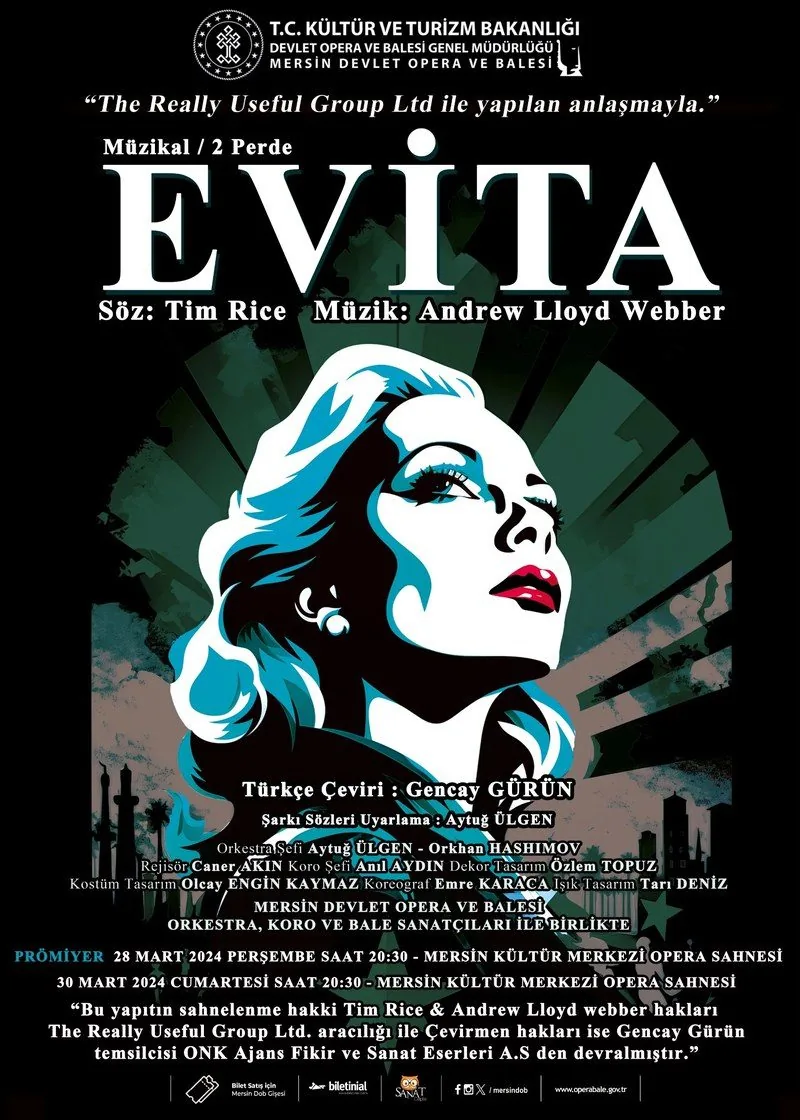
EVITA – Musical
Andrew Lloyd Webber and Tim Rice's internationally acclaimed masterpiece Evita brings to the stage the extraordinary life story of Eva Perón, one of the most influential and controversial figures in Argentine history. Built around themes of power, passion, ambition, politics, and popular devotion, this unforgettable musical chronicles the transformation of a poor provincial girl into one of the most powerful women in her country, while raising universal questions about charisma, leadership, and the nature of power itself.
Masterfully blending the traditions of rock, symphonic music, and musical theatre, Evita has secured its place among the most important works of the musical theatre repertoire through iconic songs such as Don't Cry for Me Argentina, Buenos Aires, and You Must Love Me. With its large-scale choral scenes, powerful dramatic structure, and compelling character portrayals, the work transcends the boundaries of biography to become a universal reflection on leadership, popular support, idealism, and political power.
For this production, the Turkish translation of the work was prepared by conductor and composer Aytuğ Ülgen. A substantial portion of the musical arrangements and orchestrations was also created by Ülgen, remaining faithful to the original musical language of the score while adopting a new approach centered on the expressive possibilities of a full opera orchestra and chorus. As a result, the production preserves the vitality and energy of musical theatre while achieving the sonic richness and dramatic scale of an operatic performance.
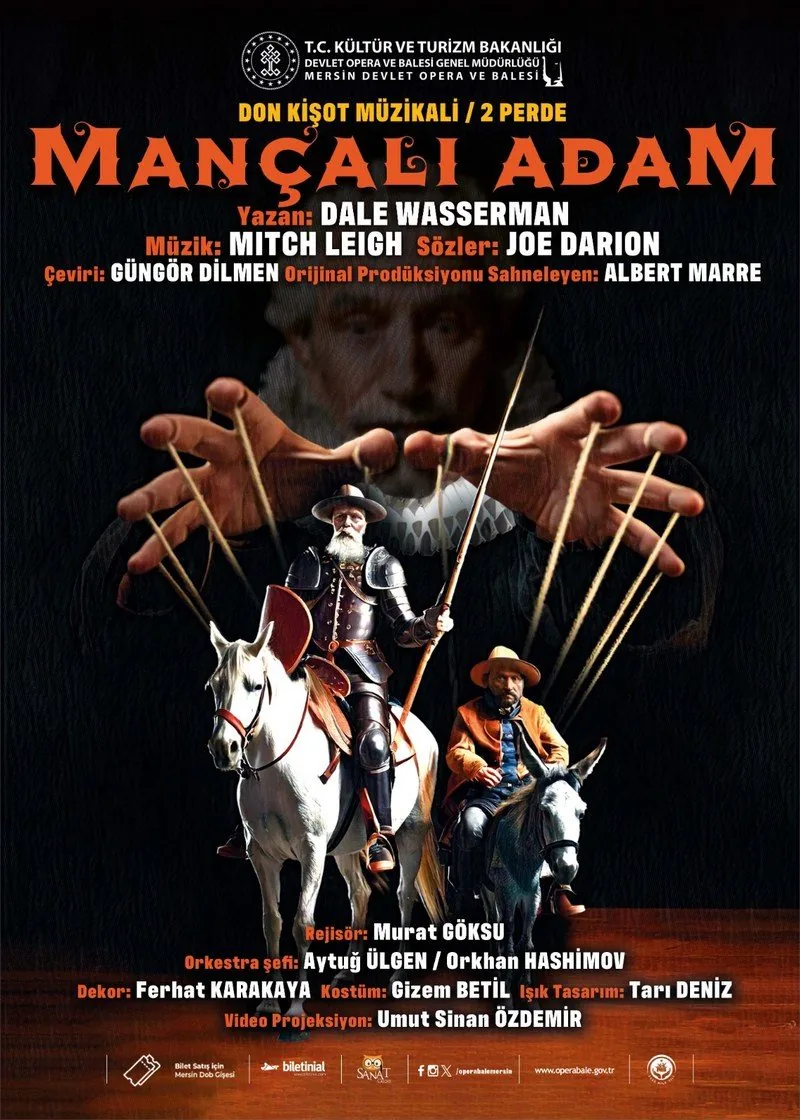


Failed writer, soldier, actor, and tax collector Miguel de Cervantes finds himself imprisoned by the Spanish Inquisition alongside his loyal servant. Inside the prison, the inmates organize a mock trial to determine Cervantes's fate. Although he agrees to stand trial, he refuses to surrender the precious manuscript that the prisoners are eager to burn. Instead, he proposes a defense unlike any other: a play in which he and the inmates themselves will take part. Thus begins the story of Alonso Quijana, an aging gentleman who abandons ordinary life to become a wandering knight. Taking the name Don Quixote de la Mancha, he sets out with his faithful squire, Sancho Panza, in search of adventure, justice, and impossible dreams.
After a series of extraordinary adventures, Don Quixote finally encounters the Knight of the Mirrors, who forces him to see himself as the world sees him: not as a noble knight, but as a deluded fool. Confronted with this devastating truth, Alonso Quijana collapses. Back in his bedchamber, aware that death is approaching, he suddenly remembers that he is Don Quixote, rises from his bed, and calls for his armor and sword, determined to ride out once more. But it is too late. At that very moment, Cervantes is summoned to face judgment. Deeply moved by the story he has shared, the prisoners declare him innocent and return his manuscript.